
Webinar: The Future of QA in the AI World. Register Now.
Turn your manual testers into automation experts! Request a Demo

Release Notes: Wait

Enhanced “Wait” Command

We’ve introduced a new setting for how wait times are handled in the wait x seconds up to y times until command. This feature gives users more flexibility in managing wait behavior during testing and automation processes.

Key Updates:

  • Perform Wait in Each Iteration: The current default behavior. The system loops x times, performing a wait during each iteration.
  • Calculate Time and Timeout: This new option calculates the total wait time (e.g., “wait 2 seconds up to 5 times” equals 10 seconds total). The process will fail if this total time is exceeded.

For new projects, the Calculate Time and Timeout option will be the default setting. Existing projects will continue using the “Perform Wait in Each Iteration” option.

You can find this setting in Settings -> Speed Optimizations
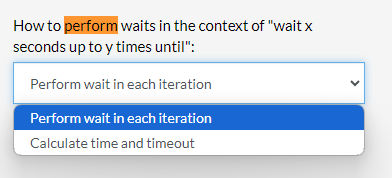
Caption: Setting location


You can see an example in the image below:
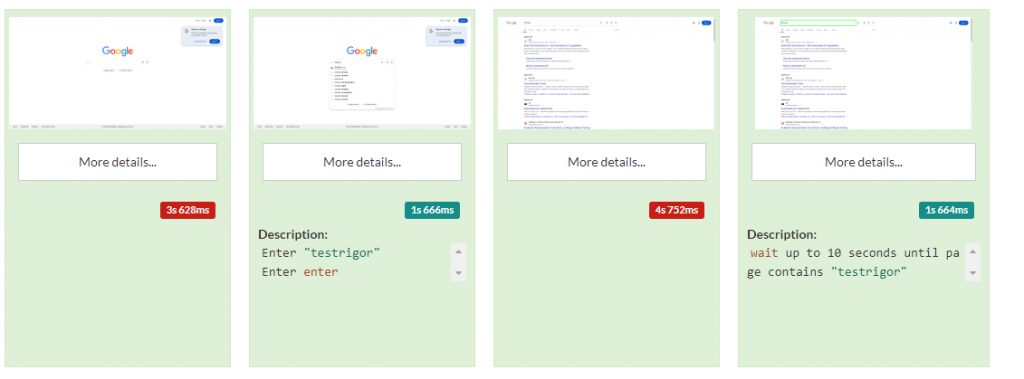
Caption: Wait adding “up” enhancement


For more information, please refer to our official documentation.

Related Articles

What Is a QA Engineer and What Do They Do?

Be a yardstick of quality. Some people aren’t used to an environment where excellence is expected – Steve Jobs. In ...

Release Notes: Safari Native Clicks, Telnyx Phone Calls

Added Support for Native Clicks in Safari This update introduces native click support in Safari, enabling precise Safari ...
Privacy Overview
This site utilizes cookies to enhance your browsing experience. Among these, essential cookies are stored on your browser as they are necessary for ...
Read more
Strictly Necessary CookiesAlways Enabled
Essential cookies are crucial for the proper functioning and security of the website.
Non-NecessaryEnabled
Cookies that are not essential for the website's functionality but are employed to gather additional data. You can choose to opt out by using this toggle switch. These cookies gather data for analytics and performance tracking purposes.