Vercel Hack 2026: A Wake-Up Call for Software Testing
 |
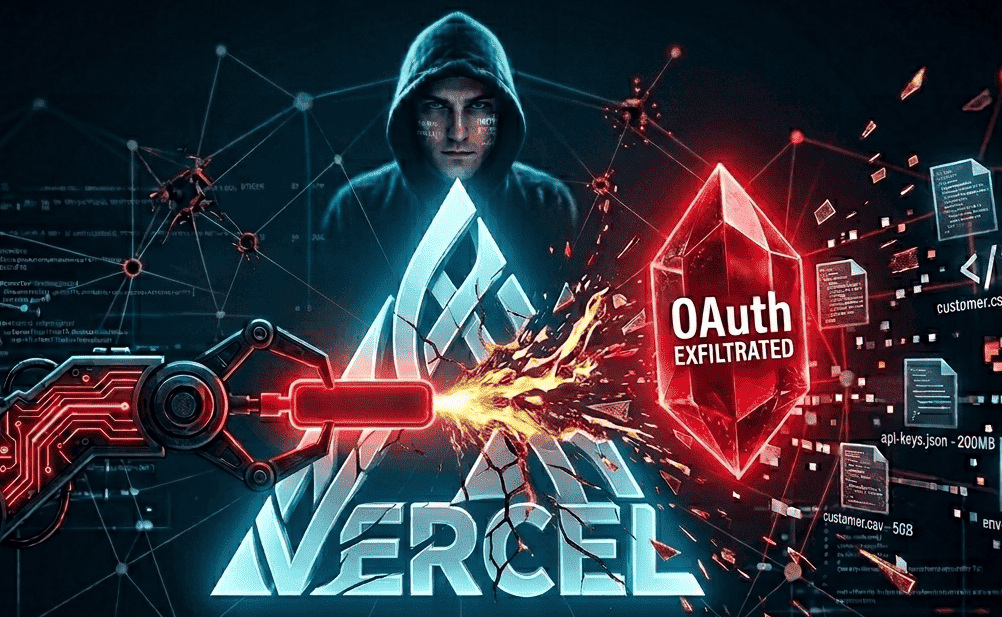
In April 2026, the incident drew significant attention across the software and security industries. Vercel, the company behind Next.js and a leader in modern web development, confirmed that its internal systems had been breached.
The attack was not a direct compromise of Vercel’s infrastructure. Rather, the OAuth token theft from a third-party AI tool gave the attackers a path forward. The compromise of the AWS environment in the Context.ai productivity tool gave the attackers access to a Vercel employee’s Google Workspace account. In an era where we race to embed AI in every aspect of software development (SDLC), this incident is a major software testing wake-up call.
The lesson here is that no matter how strong our security systems are, even an integration with a common AI tool can introduce serious risks.
| Key Takeaways: |
|---|
|
What Really Happened Behind the Vercel Incident in April 2026
This security breach was not a failure of Vercel’s underlying technical systems, but rather a supply chain attack through identity and OAuth compromise. This highlights the growing importance of AI supply chain security.
An employee had authorized Context.ai, a third-party AI tool intended to help improve productivity. The tool was granted broad permissions through Google Workspace OAuth. When Context.ai was compromised following a Lumma Stealer infection on a Context.ai employee device in February 2026, attackers used stolen OAuth tokens to compromise the employee’s Google Workspace account. From there, they gained access to the company’s Vercel account and pivoted into its environments. They then performed environment variable exfiltration, targeting variables not marked as sensitive.
This highlights the critical distinction between “sensitive” and “non-sensitive” variables. Those non-sensitive variables stored in a format readable by internal systems became the primary target. Vercel believes the attacker was highly skilled and may have used AI tools. They are working with Google-owned Mandiant and law enforcement, and are in direct contact with Context.ai.
Vercel’s Instructions to Users
- Enable Multi-Factor Authentication: Use an authenticator app or a phishing-resistant passkey.
- Review and rotate all potentially exposed environment variables immediately, including API keys, tokens, and database credentials. Treat them as potentially exposed.
- Mark secrets as Sensitive going forward for stronger protection.
- Review activity logs (via dashboard or CLI) and recent deployments for unexpected or suspicious activity. If suspicious activity is detected, remove the affected deployments.
- Set Deployment Protection to Standard (minimum) and rotate any configured bypass tokens.
- Investigate and revoke unauthorized OAuth grants in your Google Workspace (specifically Client ID: 110671459871-30f1spbu0hptbs60cb4vsmv79i7bbvqj).
Important: Simply deleting projects or accounts is not sufficient. You must rotate secrets first to prevent any potential lateral movement by attackers.
I also have my portfolio website deployed on Vercel. Luckily, I received a confirmation email from Vercel that my Vercel account is safe.
A Note of Caution
Organizations are facing growing security concerns regarding AI adoption. Many organizations are rapidly adopting AI tools to remain competitive. But this incident highlights the third-party AI risk of Shadow AI: developers using unsanctioned AI plugins, extensions, or tools that have not been properly security reviewed.
If an AI tool asks for broad permissions, such as full read access to a Google Drive or a persistent OAuth grant, that is a significant risk.
Why Should Testers and QA professionals Pay Attention to this?
- Check Third-Party Relationships: Verify trust boundaries and permissions of every third-party tool and integration. Testers should validate that third-party access tokens are scoped to the minimum necessary and do not grant lateral access to identity providers.
- Ensure AI Permissions: When a new feature is marked complete, confirm exactly what permissions any AI components are requesting. QA must audit for unapproved browser extensions or plugins used during the development and testing phases.
- Beyond Automated Scripts: Identity and OAuth risks cannot be caught by standard functional automation alone. Teams need OAuth Security Testing processes to review permissions, OAuth scopes, and potential leakage paths. QA strategies must now include Identity-based testing to detect if high-risk scopes like (mail.google.com) or (drive.readonly) are being introduced via third-party AI integrations.
Towards Intelligent Self-Regulated Testing
This incident reminds us that it is time to evolve testing methods. Humans cannot manually verify every OAuth flow in complex cloud environments. Many teams are exploring context-aware tools, AI-assisted testing, and continuous red teaming to reduce human errors like overly broad OAuth scopes or unmonitored non-human identities.
Continuous red teaming is a security testing practice where systems are regularly and proactively simulated under attack to find vulnerabilities before real attackers do. It runs continuously or frequently, often integrated into CI/CD pipelines, to mimic real-world hacking behavior in evolving systems.
We need testing methods that are as smart as the systems we are trying to protect. Especially around permissions, identities, and third-party trust in cloud systems. In 2026, this means shifting from static functional checks to agentic QA that can autonomously audit inheritance risk and identify when third-party AI tools bypass established identity perimeters.
Finally: Can We Trust This Vibe?
Vibe coding with AI is exciting. But the Vercel incident reminds us of this: speed and convenience must not replace security. As we move toward more autonomous systems, our testing practices must become equally vigilant.
The key question for companies should no longer be only “How fast can we release?” but also “How do we ensure our AI tools and integrations are not opening doors to attackers?” The Vercel breach specifically proved that vibe-based trust in third-party OAuth permissions can lead to a total compromise of internal environments.
Are your testing methods able to help prevent supply-chain security breaches before they occur?
In this new era, only teams that treat security and QA as inseparable will thrive. Learn how to perform secure AI-driven testing by auditing for unvetted third-party integrations without violating security boundaries with testRigor.
| Achieve More Than 90% Test Automation | |
| Step by Step Walkthroughs and Help | |
| 14 Day Free Trial, Cancel Anytime |